

Latest
Video
11 September 2026
UN Resident and Humanitarian Coordinator in Ethiopia Ozonnia Ojielo Message on Ethiopian New Year
Learn more
Photo
10 September 2026
UN Ethiopia Resident and Humanitarian Coordinator visits Ethiopian IT Park
Learn more
Video
10 September 2026
UN Ethiopia Head visits Ozonnia Ojielo Ethiopian IT Park
Learn more
Latest
The Sustainable Development Goals in Ethiopia
The Sustainable Development Goals are a call for action by all countries – poor, rich and middle-income – to promote prosperity while protecting the planet. They recognize that ending poverty must go hand-in-hand with strategies that build economic growth and address a range of social needs including education, health, social protection, and job opportunities, while tackling climate change and environmental protection.
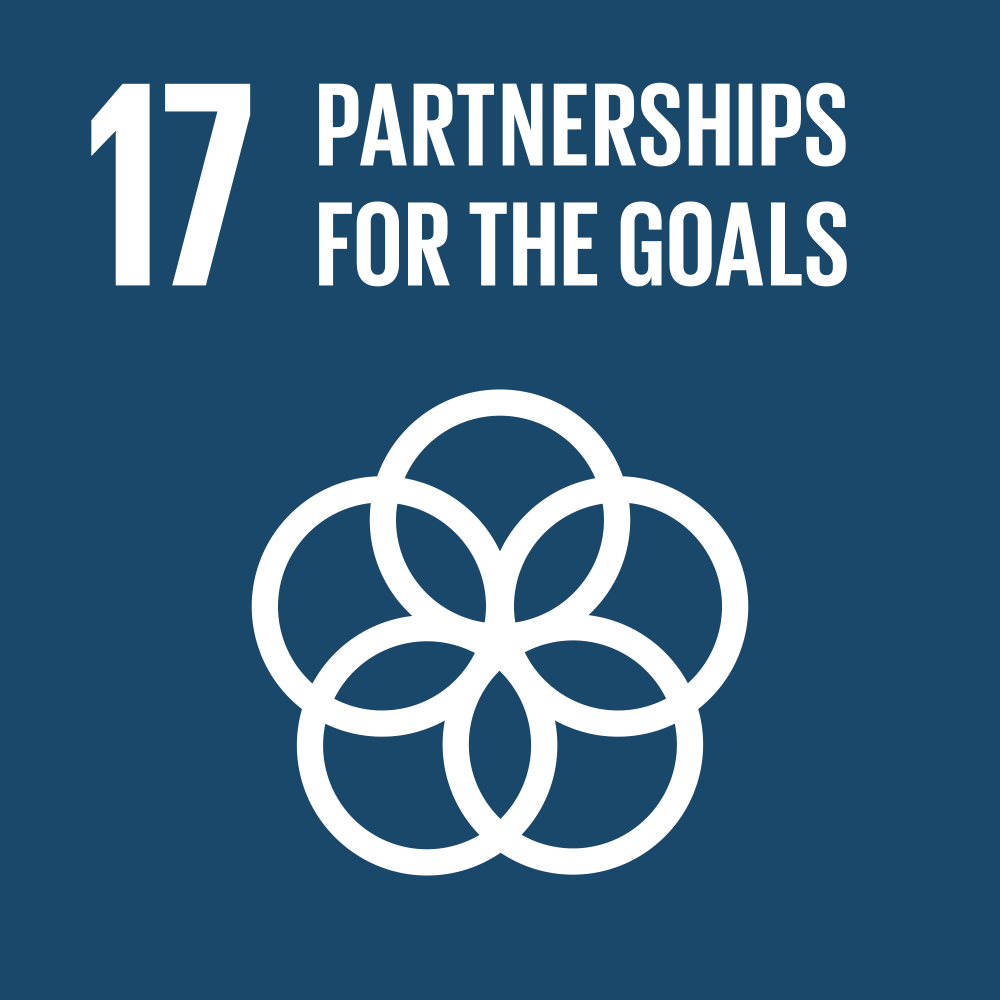
These are the goals the UN is working on in Ethiopia:
Story
24 April 2026
Enhancing collective impact of the UN in Ethiopia
The United Nations Country Team (UNCT) in Ethiopia held its strategic meeting to reflect critically on how the UN system operates in support of the development needs of the country. The meeting brought together UNCT members and Programme Management Team (PMT) colleagues from across the system, united by a shared objective to chart a more coherent and impactful way of working together to deliver solutions at scale in support of Ethiopia’s development priorities.In his opening intervention, the Director of the UN Development Coordination Office (DCO) in Africa, Yacoub El Hillo, highlighted the wider global context marked by overlapping crises, geopolitical instability, and increasing pressure on traditional development assistance, placing Ethiopia at the center of the UN’s global reform challenge. “The world is facing multiple overlapping crises, and the United Nations was created for moments exactly like this,” El Hillo stressed. “The real question in Ethiopia is not whether we remain relevant in theory, but whether we can deliver solutions, policy advice, and transformative results in practice.”In his address, the UN Assistant Secretary-General and UN Resident and Humanitarian Coordinator for Ethiopia, Ozonnia Ojielo, emphasized that Ethiopia’s national priorities - rather than agency mandates or project boundaries - must determine the UN’s mode of engagement.“Ethiopia’s needs should determine how we design our interventions,” he said, “not the boundaries of existing projects or the preferences of individual agencies.” He further underscored the importance of starting with Ethiopia’s major structural challenges and building credible, scalable responses capable of crowding in additional investment.“The UN’s comparative advantage lies in integrated analysis, convening power, technical expertise, and its ability to design and test solutions that others can finance and scale,” Ozonnia added. The meeting candidly acknowledged that while collaboration has improved at the design stage, deeper and more meaningful integration is required to deliver shared and enhanced outcomes. Participants also emphasized the need to reinforce the UN’s collective value proposition by supporting systemic solutions that link sectors, align policies, strengthen institutions, and provide trusted, evidence‑based advice.According to the UN Resident and Humanitarian Coordinator, achieving this shift requires moving beyond activity‑based cooperation.“We must go beyond activity‑driven coordination toward genuinely integrated initiatives,” he said, “initiatives that are capable of serving as proof of concept for larger national and institutional uptake.” Participants also highlighted the importance of better leveraging the UN’s existing assets, including its knowledge, normative mandate, data, communications capacity, and deep technical expertise across agencies to enhance the UN’s role as a catalyst for transformation in Ethiopia.The discussion held among the senior leadership for the UN in Ethiopia further underscored the importance of accountability, both for results and for changes in behavior. In this regard, the Programme Management Team (PMT) was identified as a key platform for translating strategic decisions into operational reality and ensuring that agreements reached at leadership level are reflected in day‑to‑day practice.The meeting concluded with agreement to translate its strategic direction into a joint declaration and a limited set of investment‑ready, systems‑level initiatives aligned with Ethiopia’s national trajectory and the United Nations Sustainable Development Cooperation Framework.Photos : UNCT Retreat 2026Video: RC/HC remarks in a short clip (UNCT Retreat)Video: UN Resident and Humanitarian Coordinator’s Engagements - Photo Highlights
1 of 3

Story
18 March 2026
Agro‑Industrial Parks Transform Ethiopia’s Avocado Value Chain
Once primarily consumed locally with limited economic value, avocado production was constrained by informal markets, low prices, and significant post-harvest losses. Despite strong agro-ecological potential, the country remained largely absent from the rapidly growing global avocado oil market.This began to change with the introduction of the Integrated Agro-Industrial Parks (IAIPs), a flagship initiative of the Government of Ethiopia supported technically by the United Nations Industrial Development Organization (UNIDO). The IAIP model connects farmers, agro-processors, logistics services, and export markets within a coordinated ecosystem, transforming fragmented subsistence agriculture into a competitive, market-oriented system.At the center of this transformation is the Yirgalem Integrated Agro-Industrial Park (YIAIP) in southern Ethiopia, where avocado was identified as a priority commodity. The establishment of processing companies such as Sunvado Avocado Oil Manufacturing PLC, YBM Avocado Processing, and Golden Organic Avocado Oil Processing Company introduced modern cold-press extraction technologies and international food safety standards. These investments enabled Ethiopia to produce high-quality organic avocado oil for export, particularly to European markets.The growing presence of processors within and around the Yirgalem corridor has created an emerging agro-industrial cluster, linking farmers, cooperatives, and service providers. Today, more than 65,000 smallholder farmers are connected to the avocado value chain through structured supply systems, benefiting from improved market access, transparent pricing, and technical support to enhance productivity and quality.For farmers, the shift has been significant. Instead of relying on informal traders, producers now supply directly to processors under more reliable and predictable market arrangements. This demand-driven system has encouraged farmers to expand production, invest in improved practices, and treat avocado as a viable income-generating crop.The impact at farm level is clearly illustrated by the experience of Wudie Tesfaye, a smallholder farmer supplying the Yirgalem ecosystem:“Before the IAIP system was introduced, I depended on informal markets dominated by brokers who dictated prices. I often transported sacks of avocado long distances only to be offered as little as 60 to 70 birr per sack. Sometimes I had to return home with unsold produce, losing both time and income. Today things are very different. Through our cooperative, we supply avocados directly to collection centers that link us to processing companies. The payment is transparent and immediate. During each harvesting season I deliver about 229 kilograms of avocado per week. With prices ranging between 18 and 40 birr per kilogram, my annual income has grown to more than 310,000 birr. With this income I can support my children’s education and reinvest in my farm. I have already planted 120 improved avocado seedlings so that I can expand production in the coming years.”— Wudie Tesfaye, smallholder farmer supplying the Yirgalem ecosystemThe expansion of avocado processing has created employment opportunities across the value chain, including in factories, logistics, aggregation, and farm-level activities. Many of these jobs are held by women and youth, contributing to more inclusive economic growth in rural communities.At the same time, IAIPs are serving as platforms for innovation. In Yirgalem, private sector-led extension services are complementing traditional public systems by providing tailored, practical training to farmers on improved agricultural practices, pest management, and water-efficient technologies such as drip irrigation. This approach is improving yields, product quality, and market readiness.Nationally, the results are evident. Avocado production has increased significantly, driven by rising industrial demand and improved value chain coordination. Regions such as Sidama and Oromia are emerging as key production hubs supplying the growing processing industry.Beyond the value chain, the IAIP ecosystem also fosters strong partnerships. Through the Programme for Country Partnership (PCP), the initiative brings together government institutions, development partners, and the private sector under a coordinated framework. This collaboration supports infrastructure development, capacity building, investment promotion, and value chain strengthening, ensuring that interventions are aligned and mutually reinforcing.The transformation of Ethiopia’s avocado sector demonstrates how integrated agro-industrial development can generate jobs, increase farmer incomes, promote exports, and strengthen rural livelihoods. By linking agriculture to industry and markets, IAIPs are positioning Ethiopia as an emerging player in the global avocado oil market while advancing inclusive and sustainable economic transformation.
1 of 3

Video
24 April 2026
UN Resident and Humanitarian Coordinator Remarks at UN Country Team Strategic Meeting
UN Resident and Humanitarian Coordinator Ethiopia, Ozonnia Ojielo, called for greater coherence, integration, scale and financing for coordinated and impactful UN support aligned with Ethiopia's needs.
1 of 3

Story
20 August 2026
International Youth Day Celebrated in Ethiopia: Advancing Inclusive Innovation and Youth Leadership
Young people are playing an increasingly important role in shaping Ethiopia's development through innovation, entrepreneurship, civic engagement, and the use of digital technologies. As the country undergoes rapid digital transformation, new opportunities are emerging for youth to contribute to national development. At the same time, challenges remain, including the need to strengthen digital skills, promote safe and inclusive online spaces, and expand meaningful partnerships that enable young people to participate in decision-making processes and drive positive change in their communities.To mark International Youth Day, approximately 200 participants, including youth organizations, university students, innovators, government representatives, UN agencies, development partners, civil society organizations, and private-sector actors, gathered to celebrate the achievements and potential of Ethiopia's young people. The event aimed to showcase youth-led innovation, strengthen intergenerational dialogue, and generate practical recommendations on how young people can contribute to national development through technology, partnerships, civic engagement, and responsible digital citizenship.In his engagement with the youth, the United Nations Resident and Humanitarian Coordinator (RC/HC) Ozonnia Ojielo (PhD) emphasized the importance of ensuring that innovation is genuinely inclusive. He stressed that digital opportunities must reach all young people, particularly young women, rural youth, internally displaced persons, and persons with disabilities, so that no young Ethiopian is left behind in the country's development journey. The RC/HC highlighted that equitable access to technology and innovation is critical to unlocking the full potential of Ethiopia's youth and achieving sustainable development.Calling on young people to take an active role in shaping their future, the RC/HC encouraged them to lead with confidence and creativity. He urged youth not to wait for permission to innovate, but instead to use their energy, ideas, and problem-solving skills to address challenges within their communities. The UN Resident and Humanitarian Coordinator expressed confidence in the strength, resilience, and determination of Ethiopia's young generation. Through innovation, collaboration, and strong partnerships, he noted, young people can transform challenges into opportunities and help build a more peaceful, prosperous, inclusive, and sustainable future. Mr. Ojielo also underscored Ethiopia's rich resources and long-standing experience in mobilizing local resources for transformative national initiatives. He emphasized that while external support remains important, greater efforts are needed to harness the country's own resources and create mechanisms that enable young people to become productive, create opportunities, and contribute meaningfully to national development.Representing the Ministry of Women and Social Affairs, Mr. Adinew Abera, Head of the Youth Organization Empowerment Desk, reaffirmed the Government's commitment to empowering Ethiopia's young people and creating an enabling environment for their success. He highlighted ongoing efforts to promote digital innovation, expand opportunities for youth entrepreneurship, and strengthen civic engagement. "At the Ministry of Women and Social Affairs, we are doing our absolute best to build and nurture an empowered generation," he said, emphasizing the Ministry's dedication to ensuring that young people have the support, skills, and opportunities needed to thrive and lead. The celebration concluded with a strong call for continued investment in youth-led innovation, inclusive digital transformation, and multi-stakeholder partnerships that empower young people to realize their full potential. Participants reaffirmed that Ethiopia's youth are not only beneficiaries of development but also key drivers of the country's progress and transformation.
1 of 5

Story
13 August 2026
Rebuilding schools, restoring learning
Children deserve the best. In the conflict-affected Amhara region, UNICEF, with support from the Japan International Cooperation Agency (JICA), is rehabilitating schools to help children return to safe learning environments. New classroom blocks, boys' and girls' latrines, and girls' safe spaces are giving children the opportunity to learn, grow and thrive.Sitting in her newly rehabilitated classroom at Bistima Primary School, 12-year-old Hania Oumer appreciates the difference it has made to her learning. “It is comfortable to learn in this classroom. It is neat and bright,” she says.As the academic year draws to a close, Hania stands before her classmates leading a mathematics revision session, confidently guiding them through model exam questions.“I love mathematics because of my elder sister. She helps me at home, and I am good at it,” says Hania.Like Hania, Hayat Endirs is thriving in a newly rehabilitated school environment. Studying at Harbu Primary School, many kilometres away from Bistima, she says her new classroom has transformed the way she experiences school.“The new classrooms help us learn better,” says Hayat. She remembers studying in overcrowded mud-built classrooms, a stark contrast to the bright and comfortable spaces where she and her classmates learn today. The conflict in northern Ethiopia left many schools across the Amhara region damaged or occupied as shelters for displaced families, interrupting children's education. With support from the Japan International Cooperation Agency (JICA) and matching funding from the Global Partnership for Education, UNICEF has been rehabilitating schools, restoring classrooms and providing desks so children can safely return to learning.To date, 13 schools across the region have been rehabilitated. New classroom blocks, boys' and girls' latrines, girls' safe spaces and other essential facilities are helping create safer, more inclusive environments where children can learn and thrive.Education is more than a pathway to the future. For children affected by conflict, it restores a sense of normalcy, hope and stability, helping them rebuild their lives one lesson at a time.
1 of 5

Story
12 August 2026
Lalibela at the Heart of Cultural Diplomacy and World Heritage Conservation
More than 70 ambassadors, United Nations representatives and development partners from over 40 embassies and organizations visited Ethiopia’s iconic Rock-Hewn Churches of Lalibela, reaffirming a shared commitment to protecting cultural heritage, strengthening international cooperation and ensuring that World Heritage contributes to sustainable development and local communities.Organized by the UNESCO Addis Ababa Liaison Office in partnership with the Ministry of Tourism, the Ethiopian Heritage Authority, the Ethiopian Orthodox Tewahedo Church, the Amhara Regional Government, the Lalibela City Administration and the Sustainable Lalibela Project supported by the Government of France, the two-day visit provided an opportunity for diplomatic and development partners to engage directly with one of Ethiopia’s most important cultural and spiritual heritage sites.Inscribed on the UNESCO World Heritage List in 1978, the 11 rock-hewn churches of Lalibela represent an exceptional achievement of medieval architecture and remain a living centre of worship, pilgrimage and cultural expression. The visit highlighted the importance of safeguarding not only the physical structures, but also the communities, traditions and cultural practices that sustain Lalibela as a living heritage site.Strengthening resilience through partnershipsThe visit provided an opportunity for participants to better understand the opportunities and challenges involved in conserving and sustainably managing Lalibela. It also highlighted the importance of strengthening partnerships between government institutions, heritage custodians, local communities, development partners and international organizations. UNESCO has worked closely with the Government of Ethiopia and partners for decades to support the conservation, protection and sustainable management of Lalibela. Through technical cooperation, capacity development and international partnerships, UNESCO contributes to safeguarding the site's Outstanding Universal Value while supporting efforts to ensure that heritage conservation contributes to local development and livelihoods.The engagement also showcased ongoing initiatives supporting Lalibela’s recovery and revitalization following the impacts of the COVID-19 pandemic and other challenges affecting tourism and local livelihoods. These efforts demonstrate how investment in cultural heritage can contribute to resilience, sustainable tourism, local economic opportunities and the long-term wellbeing of communities.Culture as a platform for cooperation and peaceThe visit further demonstrated the role of cultural heritage as a platform for dialogue, mutual understanding and international cooperation. Bringing together diplomatic representatives, UN organizations, development partners, government institutions, religious custodians and local stakeholders created space for dialogue around a shared responsibility: protecting heritage for present and future generations.By connecting international partners with local communities and heritage custodians, the visit reinforced the importance of inclusive and collaborative approaches to heritage governance and conservation.The engagement reaffirmed that safeguarding World Heritage is not solely a conservation responsibility. It requires sustained partnerships, collective action and dialogue among diverse stakeholders, while ensuring that the cultural, social and economic benefits of heritage reach the communities who are its custodians.Looking aheadThe Lalibela visit reaffirmed a shared commitment to strengthening cooperation around the protection and sustainable management of Ethiopia’s cultural heritage. It also highlighted the potential of heritage to contribute to resilience, sustainable development, cultural diplomacy and peaceful cooperation.Through continued collaboration with the Government of Ethiopia, local communities and national and international partners, UNESCO remains committed to supporting efforts to safeguard Lalibela’s Outstanding Universal Value and ensure that its cultural, spiritual and economic significance continues to benefit generations to come.
1 of 5

Story
12 August 2026
From Refugee to Construction Supervisor: A Journey Towards Self-Reliance
For most of his life, Mohamed Sheikh Ahmed could never imagine earning a steady salary, let alone supervising construction teams.When conflict erupted in Somalia in 1991, Mohamed was just a teenager. Like thousands of others fleeing violence and uncertainty, he crossed into Ethiopia and found refuge in Kebribeyah Refugee Camp. What he thought would be a temporary stay became a lifetime. More than three decades later, Kebribeyah is still home.“I arrived here in 1991 after the war,” Mohamed recalls. “At the time, we had no choice but to leave everything behind.” Over the years, Mohamed built a family in the camp. He married, raised eight children and did his best to support them. But opportunities were scarce. Like many refugees, he depended mainly on humanitarian assistance and occasional daily labour jobs whenever work was available.“Sometimes I worked on construction sites as a casual labourer,” he says. “Other times there was no work at all.” Everything changed when he heard about a vocational training opportunity under the European Union-funded Advancing Refugee Inclusion in Somali Region (ARISR) project, implemented by UNHCR and its partners.At first, Mohamed was simply looking for a chance to improve his situation. What he found was the beginning of a new career.He enrolled in a foremanship training programme delivered through Jigjiga Polytechnic College at the Satellite TVET Centre in Kebribeyah. The course provided practical skills in construction supervision, workplace safety, electrical installation and basic building techniques. Mohamed embraced the opportunity with determination.“I knew this was a chance I could not miss,” he says. “I wanted to learn something that could change my life.” His commitment quickly stood out.After successfully completing the training and passing a series of assessments, Mohamed was recruited by Save the Environment Ethiopia (SeE), a partner implementing housing projects in the area. Today, he works as a Foreman Supervisor, overseeing construction activities and supporting teams of workers building homes for refugee and host communities.The job has transformed his family's future.Mohamed now earns a monthly salary, a significant improvement from the irregular income he once relied on. For the first time in years, he can plan ahead, provide stability for his children and meet household needs with greater confidence.“Before this opportunity, my family depended almost entirely on assistance,” he explains. “Now I have a profession, a salary and hope for the future.” Yet for Mohamed, the biggest change goes beyond income.The training gave him confidence, skills and a renewed sense of purpose. He no longer sees himself as someone waiting for help, but as someone contributing to his community and building a future through his own efforts.His ambitions have grown as well.One day, he hopes to become an independent contractor, managing his own construction projects and creating jobs for others, especially fellow refugees and unemployed youth.“If I continue learning and gaining experience, I want to start my own business,” he says. “I want to create opportunities for other people just as someone created an opportunity for me.” Mohamed believes many young refugees possess untapped talent and potential. What they need, he says, is a chance.He encourages young people to pursue vocational skills and education wherever opportunities arise.“Learning a skill can change your life,” he says. “Young people should take every opportunity to learn and build their future.” Today, as he walks through the construction sites he supervises, Mohamed sees more than buildings taking shape. He sees proof that refugees can thrive when given the opportunity to develop their skills and contribute to society.Grateful for the support of the European Union, UNHCR and Save the Environment Ethiopia, Mohamed hopes many more refugees will benefit from similar opportunities.“This opportunity gave me dignity, confidence and a livelihood,” he says. “I hope other young refugees receive the same chance to become self-reliant and build a better future for themselves and their families.” For Mohamed, the journey from refugee to supervisor is more than a personal success story. It is a reminder that investing in skills and inclusion can unlock potential, transform lives and turn hope into opportunity.
1 of 5

Story
11 August 2026
Building Tomorrow's Leaders: WFP Supports Youth Diplomats Driving Solutions for Food Security and Green Innovation
Their conference badges hanging proudly from their necks, delegates arrived with diverse experiences, fresh ideas, and a shared determination to create positive change. Filled with anticipation and hope, they gathered under this year's theme, "Green Legacy for Sustainable Agriculture Development and Green Innovation," ready to learn, debate, and collaborate on solutions to some of the most pressing challenges of our time, including food security, climate resilience, sustainable agriculture, and innovation. The conference provided a unique platform for young people to strengthen their leadership and diplomatic skills while contributing ideas for a more resilient and sustainable future.Now in its sixth year, LCC has grown into one of Ethiopia's premier platforms for nurturing youth leadership and diplomacy. This year's edition is jointly organized by the Ministry of Agriculture, the Ministry of Women and Social Affairs, the Ethiopian Youth Federation, the World Food Programme (WFP), and Safe Light Initiatives, a partnership that reflects a commitment to empowering young people to contribute to national development priorities and global agendas.This year’s conference theme resonates strongly with the challenges and opportunities facing Ethiopia today. As climate change continues to impact livelihoods and food systems, there is an increasing need for innovative solutions and collaborative action to strengthen resilience and food security. Young people have a critical role to play in this effort, bringing fresh perspectives and creativity to some of the country's most pressing development challenges.“The Leadership and Cooperation Conference gave me the opportunity to connect with young people and leaders from different backgrounds, share ideas, and learn how collaboration can help address challenges facing our communities. It inspired me to take a more active role in promoting sustainable solutions and positive change.” –Natanim Tesfaye, Youth Participant, LCC.LCC 2026 aligns with WFP Ethiopia’s commitment to supporting the Government’s efforts in building resilient and self-reliant food systems through community-led and locally owned solutions. It offered a strong platform to showcase WFP’s climate resilience work and engage decision-makers in attendance, including Government ministers, ambassadors, private sector and financial institution representatives, and media organizations. Across Ethiopia, WFP works alongside the Government and other partners to strengthen food security and resilience through climate-adaptive livelihoods, supporting smallholder farmers, pastoralists, women, and youth with sustainable agricultural practices, water management solutions, market access, financial services, and climate risk-management tools. Together, these investments are helping communities adapt to climate shocks, improve productivity, diversify incomes, and build pathways towards greater self-reliance.Adding a practical dimension to the conference, WFP Ethiopia's IGNITE Innovation Champions joined delegates to share firsthand experiences from the field. Drawing on their work with communities across the country, they highlighted how innovation is being used to strengthen food security, support sustainable livelihoods, and build resilience to climate shocks. Their stories offered young delegates valuable insights into the power of local solutions and reinforced the importance of innovation in addressing development challenges.The conference serves as a reminder that lasting progress is achieved through partnership. The three-day program immersed participants in the practice of diplomacy while grounding their work in a pressing national challenge: building a more sustainable and innovative agricultural sector. A city tour of Addis Ababa, a diplomatic dinner, and a diplomatic simulation and showcase gave delegates hands-on experience in negotiation, representation, and cross-cultural dialogue.The diplomatic dinner drew a high-level lineup of speakers: H.E. Dr. Ergogie Tesfaye, Minister of Women and Social Affairs, delivered a keynote address, followed by H.E. Addisu Arega, Minister of Agriculture, who gave a keynote speech and graced by the Guest of Honor of the day H.E. Temesegn Tiruneh the Deputy Prime Minister of Ethiopia commenced the conference. Dr. Ozzina of the UN Resident and Humanitarian Coordinator's (UNRCO) also addressed his inspirational journey of diplomacy from a young delegate to become a UN director.The conference culminated on its third and final day with a Youth Ambassadors Accreditation simulation and Award Ceremony, formally recognizing participants as Youth Ambassadors and honoring outstanding contributions. Speaking at the closing event, Dr. Mutinta Hambayi, WFP Country Director a.i. encouraged young people to think boldly, embrace collaboration and drive innovative solutions that help communities not only withstand shocks, but thrive.At its core, LCC 2026 continues the conference's founding vision: developing young people as capable diplomats and leaders. By anchoring this year's theme in agriculture and green innovation, organizers are directly connecting youth leadership development to one of Ethiopia's most vital sectors one that touches food security, environmental sustainability, and economic resilience alike.As delegates moved through this year's sessions, simulations, and ceremonies, LCC 2026 stood as both a training ground and a statement of intent: that Ethiopia's next generation of diplomats and innovators is already building toward a greener, more resilient future rooted in sustainable agriculture.
1 of 5

Press Release
27 August 2026
Security Council Press Statement on August 24 Attack Against United Nations Mission in South Sudan (UNMISS) Peacekeepers
The members of the Security Council expressed their deepest condolences and sympathy to the families and relatives of the victims and extended their full support to the affected troop-contributing countries. They wished a swift and full recovery to those injured.The members of the Security Council recalled resolution 2823 (2026). The members of the Security Council underscored that attacks against UN peacekeepers may constitute war crimes under international law and demanded a full, transparent, and immediate investigation. They insisted that those responsible be identified and brought to justice without delay and warned that impunity for such attacks is unacceptable. The members of the Security Council expressed deep alarm at the persistent intercommunal and armed violence in Jonglei State and its devastating toll on civilians, humanitarian workers, and peacekeepers alike. They demanded that South Sudanese political and community leaders engage in efforts and take immediate and decisive action to end the violence and ensure the protection of all those working to advance peace and security in South Sudan.The members of the Security Council noted the prompt activation of UNMISS’ emergency response procedures, including the deployment of a Quick Reaction Force.The members of the Security Council reaffirmed their unwavering support for UNMISS and its mandate to protect civilians and sustain the peace process in South Sudan. They emphasized that the Government of South Sudan must work with UNMISS, within its mandated capacity, to ensure the safety and security of its peacekeepers and to implement its mandate to protect civilians and to support the peace process in South Sudan.
1 of 5
Press Release
25 August 2026
UN Secretary-General on the death of two UNMISS peacekeepers in South Sudan
Two Ethiopian peacekeepers were killed in the attack, while seven others were injured, including three Ethiopian peacekeepers, two South Sudan National Police Service personnel and two UNMISS civilian staff. The Secretary-General expresses his deep condolences to the families of those killed and to their respective Governments and wishes all those injured a swift and full recovery. The Secretary-General reminds that attacks against UN peacekeepers may constitute war crimes. All attacks on peacekeepers must be promptly investigated, and those responsible must be effectively prosecuted and held accountable.The Secretary-General reaffirms the United Nations’ commitment to stand with the victims and their families during this profoundly difficult time.Stéphane Dujarric, Spokesman for the Secretary-GeneralNew York, 24 August 2026
1 of 5
Press Release
24 August 2026
UNMISS condemns ambush on its patrol in Jonglei, killing of two peacekeepers
Two peacekeepers were killed in the attack, while seven others were injured, including three peacekeepers, two South Sudan National Police Service personnel and two civilian staff.The Mission has deployed a Quick Reaction Force to secure the area and support the emergency response.“Such deadly violence targeting UNMISS personnel who are serving to support peace in South Sudan is unacceptable. I extend my deepest condolences to the family and loved ones of the peacekeepers who lost their lives and wish those injured a speedy recovery,” said Anita Kiki Gbeho, Special Representative of the UN Secretary-General and Head of UNMISS.The Mission recalls that attacks against UN peacekeepers may constitute war crimes under international law, including international humanitarian law.“I call on relevant authorities to conduct a thorough and prompt investigation to ensure that those responsible are brought to justice,” SRSG Gbeho added.Priyanka Chowdhury | Spokesperson |UNMISS| Tel: +211 912108281|
1 of 5
Press Release
18 June 2026
Ethiopia Launches Groundbreaking "Makatet Roadmap", Ushering in an Era of Refugee Inclusion
Developed through an intense, nationally driven process involving federal and regional institutions, development partners, UN agencies, civil society and refugee representatives, this comprehensive framework established a unified blueprint for the socio-economic inclusion of refugees while significantly benefiting their gracious host communities. By shifting from temporary humanitarian relief to sustainable, government-led development planning, the roadmap set out to transform existing camp structures into cohesive, self-sustaining human settlements integrated with national service delivery systems.The high-level gathering at the Adwa Museum served as a national platform to present the finalized multisectoral framework and secure collective investment for its operational phase. The framework has officially been launched by Ethiopia's Honorable Speaker of the HPRs Ato Tagesse Chaffo and the UN High Commissioner for Refugees, culminating in a cultural performance refugee youth group.The Director General of Refugees and Returnees Service (RRS) Madam Teyiba Hassen welcomed dignitaries at the ceremony by highlighting the operational shift towards inclusion, noting that the roadmap bridges the gap between the refugee operation and humanitarian landscapes."Today, we moved beyond encampment toward comprehensive town masterplans and integrated, shared services," the DG stated. "The Makatet Roadmap stands as our decisive answer to decades of fragmented assistance, as it’s a model where refugees and host communities grow together under a unified, well-coordinated, government-led system."Ethiopia’s Minister of Finance Mr. Ahmed Shide mentioned the macroeconomic and structural significance of anchoring this framework within domestic delivery systems to maximize resource efficiency."Sustainable economic resilience cannot be built in isolation," the Minister said. "With the launch of the Makatet Roadmap, the Government of Ethiopia transitioned from short-term humanitarian management to an inclusive development model that treats refugees as active contributors to our national growth. " The UN Resident Coordinator to Ethiopia Mr. Ozonia Ojielo underscored the international community's shared commitment to the framework, celebrating it as a triumph of cooperative planning."The UN family stands firmly behind this nationally driven vision," noted the Resident Coordinator. "The Makatet Roadmap is a testament to what can be achieved when government institutions, civil society and international partners unite around a shared goal."The Chairperson of the African Union Commission Mahmoud Ali Youssouf lauded Ethiopia's progressive and commendable leadership on a continental stage."Ethiopia’s visionary approach aligns perfectly with our collective continental aspirations for inclusion, dignity and stability under Agenda 2063," stated the Chairperson. "By creating structural pathways for the social and economic inclusion of displaced populations, this roadmap serves as an inspiring example for the entire African Union, proving that displacement challenges can be transformed into opportunities for regional development and shared prosperity."The High Commissioner for Refugees Mr. Barham Salih welcomed the shift, highlighting the initiative as a global standard for localized development and international responsibility sharing.“Ethiopia has set an important example by demonstrating that refugee protection and national development can—and should—advance hand in hand,” said the High Commissioner. “The Makatet Roadmap serves as a blueprint for translating that vision into practical action, creating greater opportunities for refugees and host communities alike. It is closely aligned with our 50 by 35 vision to reduce aid dependency by expanding opportunities for refugees living in protracted situations to become more self-reliant and access lasting solutions over the next ten years. UNHCR remains committed to standing alongside Ethiopia to mobilize international solidarity and the resources needed to turn these aspirations into reality.”The milestone event culminated with an address by Ethiopia's Honorable Speaker of the House of People’s Representatives Ato Tagesse Chaffo, Federal Democratic Republic of Ethiopia reaffirming his government's highest political commitment to executing area-based inclusion across all refugee-hosting regions."The Makatet Roadmap is not merely a policy document; it's a binding strategy for inclusion and development," declared Ato Tagesse Chaffo. "The Government of Ethiopia is fully committed to leading this transition. Through area-based planning and robust coordination, we will ensure that our national systems are strong enough to provide protection, opportunity and a better future for both refugees and the generous communities that host them."The Makatet Roadmap has successfully been launched, marking a major milestone in Ethiopia’s efforts to embrace refugees in its national systems. The initiative mixes policies, legal frameworks and area-based plans into a coordinated strategy to foster inclusion, resilience and shared growth in spite of resource constraints. FOR MORE INFORMATION, PLEASE CONTACT:RRS : Sileshi Demisew, sileshid@rrs.gov.et, +251 912 023 969 UNHCR : Sona Dadi, dadis@unhcr.org, +251 932 459 640
1 of 5
Press Release
12 May 2026
Gazanche Primary School Project Launched with Site Handover Ceremony in Gurage Zone, Ethiopia
Gazanchi, Ethiopia – May 12, 2026 – Following the signing of a €4.2 million agreement between UNOPS and the Government of Italy to construct primary schools in underserved regions of Ethiopia, the official project launch and site handover ceremony for Gazanche Primary School took place on Tuesday, May 12, 2026, in Gazanche, Gurage Zone, Central Ethiopia.Building on the partnership between UNOPS and the Government of Italy, the milestone event marked the transition from planning to on-the-ground implementation. The project directly contributes to Sustainable Development Goal 4 (SDG 4), which aims to ensure inclusive, equitable, and quality education for all. The Gazanche Primary School is one of the facilities under this €4.2 million initiative, targeting the Gurage Zone in the Central Ethiopia Region State and the West Shewa Zone in the Oromia Region. Once completed, the project is expected to directly benefit more than 4,000 students and their families, fostering socio-economic development and enabling brighter futures for these historically underserved communities.The May 12 ceremony featured the formal handover of the site to the local contractor, signaling the start of construction. Senior representatives from UNOPS, the Italian Agency for Development Cooperation (AICS), and the Italian Embassy in Ethiopia joined high-level regional administrators, underscoring a strong bilateral commitment to the project. Speaking at the event, H.E. Ambassador Sem Fabrizi stated: “Investing in a school means investing in the stability and development of a community. In Gazanche, Italy is supporting more accessible, inclusive and dignified education, responding to the real needs of students and their families. This project is the result of close cooperation with Ethiopian authorities and UNOPS, and reflects a concrete commitment to creating opportunities where they are most needed.”Ms. Worknesh Mekonnen, Director of the UNOPS Horn of Africa Multi-Country Office and Representative to the African Union, added: “This handover is a tangible demonstration of our shared commitment to reducing disparities and promoting inclusive development. We are creating real opportunities for the next generation.”The new school facilities will feature climate-resilient infrastructure, including modern classrooms, libraries, administrative spaces, and WASH facilities to safeguard health and well-being.The ceremony concluded with a site visit, bringing together government officials, community leaders, and project stakeholders in a shared commitment to quality education for Ethiopia’s youth.[END] Notes to the editorsPress contact details: Meron Aberra, Communication Officer, UNOPS, Tel: +251 911221060, Email: merons@unops.orgRoberto Capocelli, Communication Expert, AICS, Tel: +251 933565602, Email: roberto.capocelli@aics.gov.it
1 of 5
Latest Resources
1 / 11



Resources
29 April 2025
Resources
29 April 2025
1 / 11